How Sleep Affects My Artistic Life — and How I’ve Learned to Live With It
Well, I don’t sleep well. In fact, I never really have. There’s a theory about different circadian rhythm types, and according to Google, people generally fall into one of four categories.
The Four Main Chronotypes
Dolphin (10–15% of the population):
Light sleepers who often experience insomnia or disrupted sleep. They tend to have erratic and uneven productivity patterns throughout the day.
Bear (50–55% of the population):
People who follow the solar cycle. They wake up and go to sleep with the sun and are typically most productive between 11 a.m. and 6 p.m.
Lion (15–20% of the population):
Early risers who are most productive in the morning. They often wake up before 6 a.m. and struggle to stay awake in the evening.
Wolf (15–30% of the population):
Classic night owls who find it difficult to wake up early. They tend to be most productive in the late afternoon or at night.
My Life as a Wolf
As far as I know, I’m a wolf type, which is both great and terrible at the same time. On one hand, wolves are often considered highly creative. On the other hand, the world simply doesn’t function during the hours when we perform best.
While other kids were going to school in the morning, I was constantly suffering from sleep deprivation. Any difficult exam or demanding subject early in the day was basically a recipe for disaster.
The last two classes of the day were where I performed at my peak, and I usually ended up with top grades. In the mornings, though? Well… getting a B or C felt disappointing. For someone who scored well above the entry level for Mensa, it was genuinely frustrating.
What Changed?
Nothing. xD
I stopped fighting my nature, especially because I don’t believe it’s something you can truly change. Honestly, I’m happy about that now. Instead of forcing myself into a schedule that doesn’t suit me, I completely rearranged my daily routine around my chronotype.
Things That Helped Me
The biggest improvement came from adapting my work schedule to the hours that naturally work best for me.
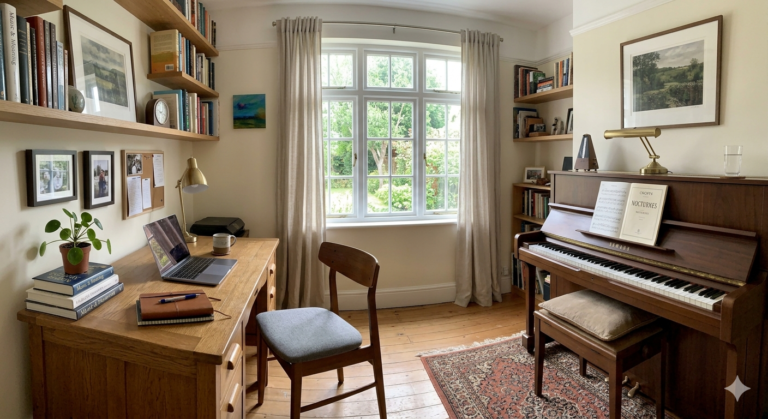
- 9 a.m. — I wake up and play piano for 3–4 hours.
- 2 p.m. – 4 p.m. — I work on the most intellectually demanding tasks. This is when my focus is strongest, and I can work quickly without needing many breaks.
- 4:30 p.m. — Workout and stretching.
- 6 p.m. until midnight (often later) — Writing music, analyzing other people’s compositions, reading scores, listening, and studying music.
What I’m Still Learning
Optimizing my schedule has actually saved me a huge amount of time.
Working at the right time of day feels far more effective and almost effortless. For years, I believed that if I wasn’t waking up at 6:30 a.m. and working by 7:30, I was lazy and wasting my life.
Letting go of that mindset helped me stop constantly stressing myself out, and ironically, it made me much more productive. I noticed that when I’m relaxed and fully focused, I lose my sense of time and accomplish far more within the same number of hours. It becomes much easier to enter a deep-work state, especially when it comes to creative work.
For most of my life, I measured productivity by the number of hours spent working. So when I started achieving the same results in less time, I actually felt guilty about it. I constantly felt like I should be doing more, and that sense of remorse followed me everywhere.
Sleeping Too Long?
I sleep for a long time — or at least I spend a long time in bed. Sometimes even 10 hours doesn’t seem unusual. For a long time, I treated this as another weakness.
Falling asleep takes a tremendous amount of effort for me. I can lie in bed completely still, desperately wanting to sleep, and still remain awake for hours.
And if I get less than 7.5 hours of sleep, I simply can’t function properly. I really can’t. Anything that requires serious thinking becomes impossible. Practicing music or training also becomes ineffective. On days like that, the most productive thing I can manage is buying groceries.
But that’s not the only issue. I also struggle with getting out of bed after waking up. Most people say, “Don’t negotiate with yourself — just get up.” In my case, though, it doesn’t work that way. Eventually I do get up, but it takes time.
So sleep has always been a challenge for me, not only because of how long I sleep, but because of how difficult both falling asleep and waking up have always been.
One Comforting Thought
One thing that comforts me is knowing how important sleep is for learning and neuroplasticity. The more I’ve read about it, the more I’ve realized how crucial consistency is.
Sleeping the same amount every night matters more than sleeping a different number of hours every day. It’s better to consistently sleep six hours every night than to sleep nine hours one day and five the next.
Consistency is king.